



Einstein’s Love Life and the Women Behind the Genius
PR
 日本語
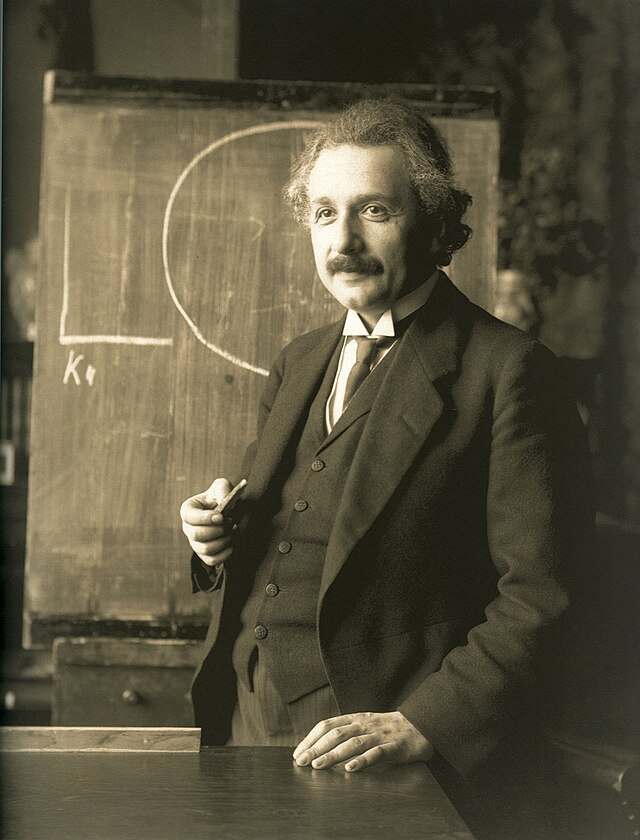
Albert Einstein.
The man who formulated the theory of relativity and is hailed as the greatest genius of the 20th century.
But inside that brilliant mind swirled not only equations—
it also held a passionate and tangled view of love.
Born in Ulm, southern Germany, Einstein revolutionized theoretical physics while working at the Swiss Patent Office.
Behind the discoveries that changed the world lay a series of loves—at times intense, at times filled with anguish.
He wasn’t just a genius.
Even in love, Einstein was… relative.
A Childhood of Dreams and Solitude
Music, Magnetism, and First Love
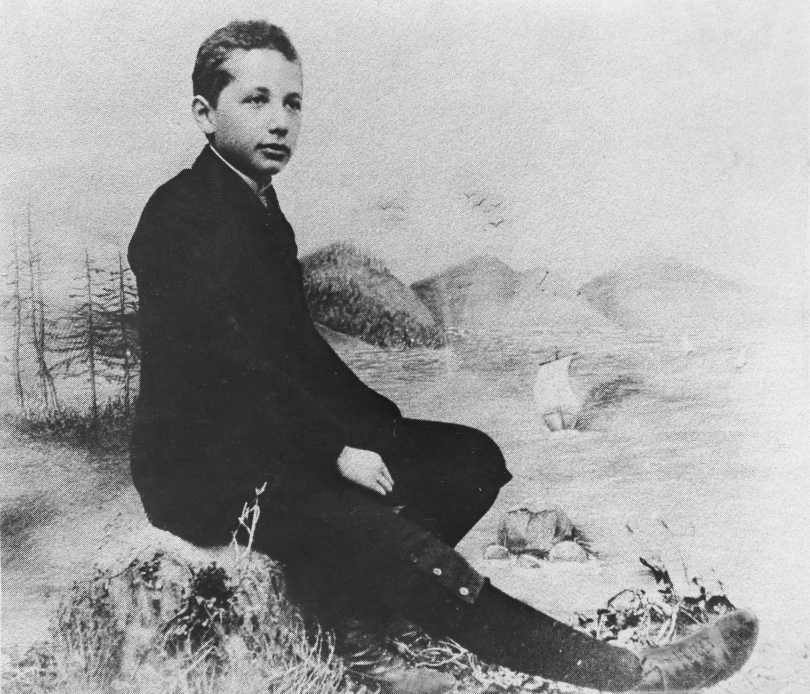
Young Albert was a quiet, sensitive child.
He spoke late and often preferred solitude.
But his mind always turned inward—toward the depths of the universe and the human heart.
At age five, his father gave him a compass, and Einstein became obsessed with the “invisible forces” it revealed.
There was a piano at home.
He would close his eyes, listening to his mother play Schubert.
And even he had a faint memory of first love.
In 1895, at sixteen, Einstein boarded with the Winteler family in Aarau, Switzerland, in order to attend the cantonal school there. He fell in love with Marie Winteler, the family’s daughter, who was two years older than him, and letters addressed to her survive.
In 1896, when he moved on to the Polytechnic in Zurich (ETH), the relationship came to a natural end.
Heat and Hesitation in Youth
Love Letters and Escapism as a Student
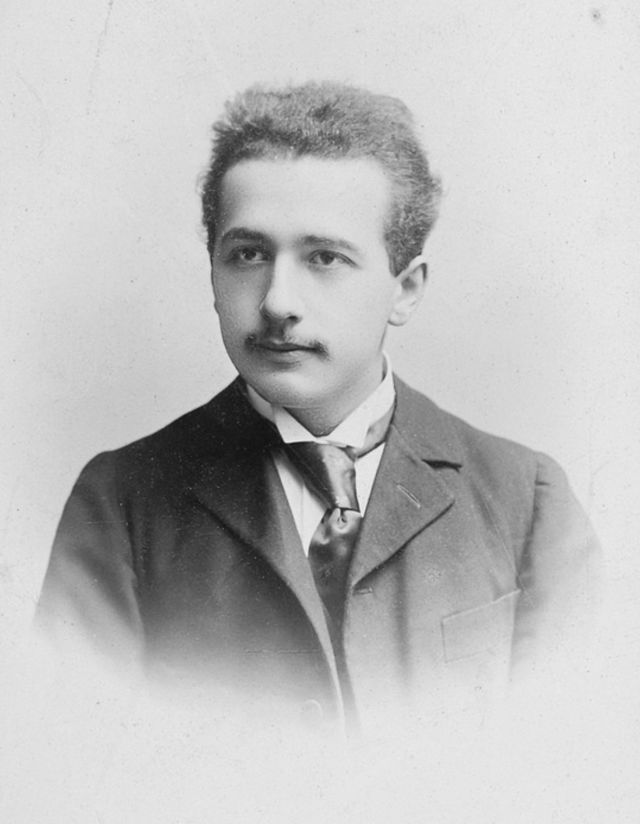
During his time at ETH Zurich, Einstein was unexpectedly prolific with love letters.
He preferred lively debates in cafés over lectures.
On his desk sat equations—and sometimes flirtatious letters side by side.
He often wrote impassioned messages to classmates and women he met in town.
“Your smile reached my heart faster than the speed of light.”
Even his pick-up lines hinted at relativity.
At the same time, he struggled to find work after graduation and faced mounting psychological pressure.
Love, perhaps, was his way of escaping reality and affirming his self-worth.
Between Love and Equations
Meeting Mileva Marić
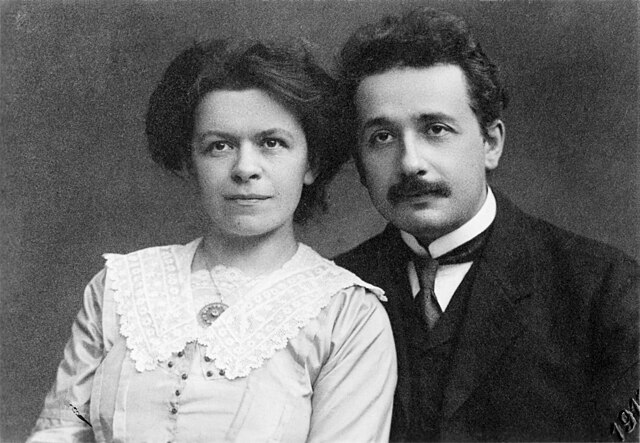
In 1900, at age 21, Einstein met Mileva Marić, a fellow student at ETH Zurich.
She was a rare woman studying physics at the time—a brilliant, Serbian-born intellectual.
Einstein was immediately drawn to her.
“Whenever I talk with you,” he wrote, “the world looks different.”
Between them flowed a tension—part friendship, part romance—charged with intellectual chemistry.
They married in 1903.
Shortly before that, the couple had a daughter, Lieserl, whose fate remains a mystery.
Some say she was given up for adoption; others, that she died young.
The truth is still hidden in the mist.
Marriage and Its Collapse
Though Einstein now had a family, his passion for research and the pressures of daily life slowly eroded their bond.
In 1905, at age 26, Einstein published a series of papers now known as his “miracle year,” including the special theory of relativity.
At the time, he was an unknown patent clerk.
But those papers sent shockwaves through the world of physics.
He soared to fame—
While Mileva, buried in domestic life, faded into the background.
Eventually, Einstein presented her with a list of 13 conditions for cohabitation:
“You must not speak to me.”
“You will obey my orders.”
“You must not enter my study or bedroom uninvited.”
It was less a marriage contract than a treaty of efficiency.
They divorced in 1919 when Einstein was 40.
As part of the settlement, he promised her the prize money if he ever won a Nobel.
In 1921, at age 42, he did just that.
A Second Marriage, But Peace Remained Elusive
The Cousin: Elsa
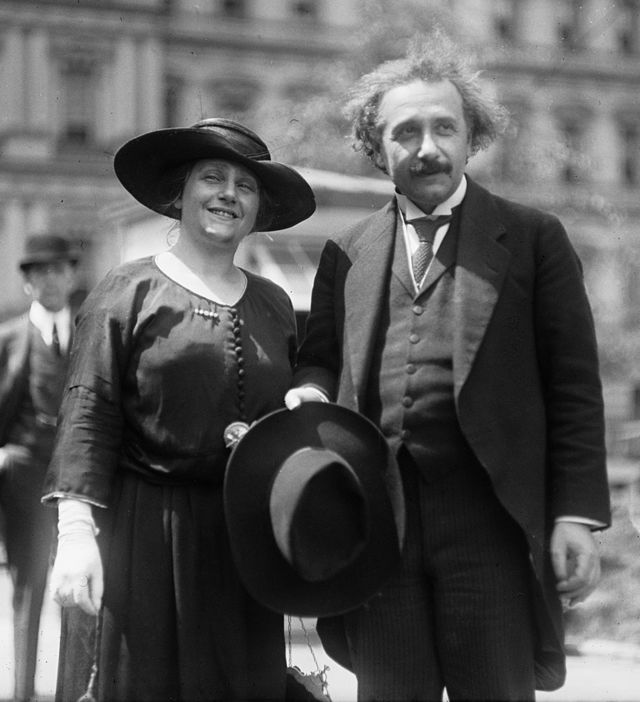
In the same year as his divorce, Einstein married his cousin Elsa.
She was devoted and domestic.
He once said she even worried about the wrinkles in his trousers.
But even this relationship began to fray.
Despite the marriage, Einstein continued to engage with multiple women—
assistants, journalists, the wives of doctors, even the daughters of friends.
His letters are full of flirtatious asides to a string of women, as when he wrote of walking by the lake with Berta, missing his wife, of course, and remarking that Berta’s hat had worse taste than hers.
Behind the witty charm lurked a lack of accuntability in love.
Women drawn to Einstein were enchanted not just by his intellect and humor,
but by his rebellious, nonconformist spirit.
One woman even said:
“Looking into his eyes made me feel I finally understood why the Earth turns.”
But often, his love was one-sided. Women drawn by his intellect often found themselves pulled into his orbit, their own lives pushed off course.
Setting Conditions for Love
Einstein seemed to seek “laws” even in love.
In July 1914, Einstein presented his wife Mileva with a list of conditions for continuing to live together:
“Take care of household matters for me: keep my clothes and laundry in good order, and serve my three meals regularly in my room.”
“Don’t intrude on my time.”
“Limit jealousy.”
It was love as experiment—conditions carefully set.
Some of his lovers couldn’t even reveal their relationship.
They were married, students, or colleagues—identified only by initials or symbols in his letters.
He once joked to a friend that, if he were ever sued for his love life, half the jury would be his ex-lovers—and the other half, their husbands.
His many overlapping affairs, including sexual ones, did not seem to weigh on him.
To Einstein, perhaps, they wer extensions of curiosity—another experiment to understand the human condition.
Late Letters and Quiet Philosophy
The Secretary: Helen
In 1933, Einstein fled to the U.S. to escape the rise of the Nazis.
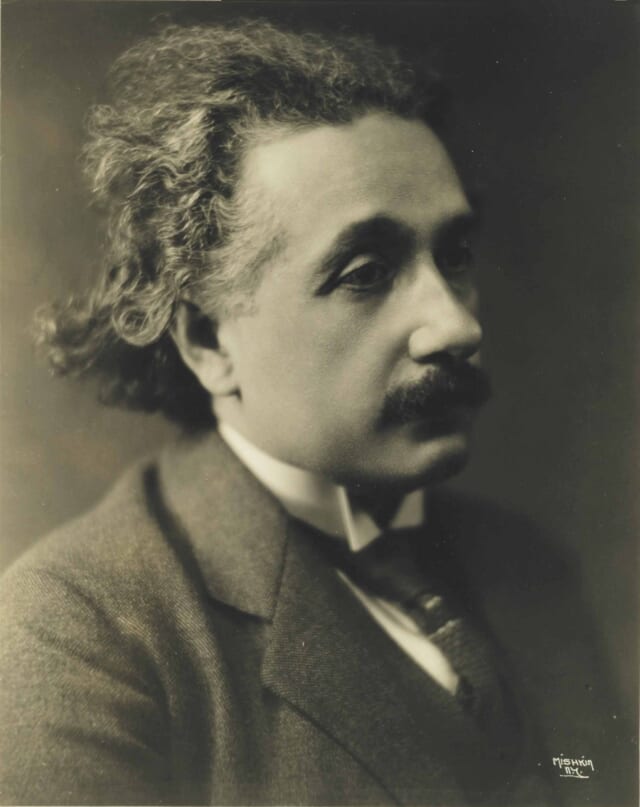
For the next two decades, his companion was Helen Dukas, his secretary.
She wasn’t an academic collaborator—she was his emotional anchor.
It’s unclear if theirs was a romantic relationship,
but after Elsa’s death, Helen continued to quietly support his daily life.
She helped draft letters, soothed his moods—
like a gentle assistant helping a weary old astronomer close his celestial journal.
Between Love and Freedom
Einstein’s late letters brim with insight on life and love.
He spoke often of the “freedom to escape the bonds of human entanglement,”
and of the truths seen only in solitude.
And yet, even then, his letters to women carried a youthful thrill.
“Every time I recall your voice, the universe seems to open up in silence.”
To him, love was not a feeling to be solved—
It was elusive, ambiguous, and sometimes broken.
It was in that uncertainty where he may have found true beauty.
What Einstein Believed About Love
Einstein’s romantic life was, in a word, “free”—and equally “lonely.”
He loved.
He was drawn to many women, let them go, betrayed some, admired others.
But beneath it all churned two opposing desires:
To be understood—and to never be bound.
The love that poured from his brilliant mind took no single form.
It was a constellation of feelings—always shifting, always relative.
No matter how much he unraveled the universe,
the human heart remained an equation with no solution.
Related Books | Dive Deeper into Einstein
This page contains affiliate links. If you buy through them, Love Legends may earn a commission at no extra cost to you.
スクロールできます

Einstein: His Life and Universe(Walter Isaacson)
The definitive modern biography, drawn from Einstein’s papers — his first love Marie Winteler, his marriage to Mileva, and his second life with Elsa.

Einstein in Love: A Scientific Romance(Dennis Overbye)
A “scientific romance” tracing young Einstein’s passion for Mileva Marić — the fellow student whose love letters with him trace the birth of relativity itself.

Albert Einstein, Mileva Maric: The Love Letters(Albert Einstein & Mileva Maric, ed. Jürgen Renn & Robert Schulmann, trans. Shawn Smith)
Fifty-four letters between Einstein and Mileva Marić, from student sweethearts to newlyweds — their own words, written as relativity was taking shape in his mind.

The Private Lives of Albert Einstein(Roger Highfield & Paul Carter)
The controversial biography of Einstein’s hidden private life — Mileva, Elsa, his affairs, and the family the saintly genius image left in shadow.
-
 Mozart's Love for Constanze and the Music It Inspired
-
Anne Frank's First Love for Peter in the Secret Annex
Related Articles
Popular articles
-
The Virgin Queen Elizabeth I and the Men She Could Not Marry
-
Osamu Dazai’s Love Life Between Passion and Death
-
Sakamoto Ryoma and Oryo, the Wife Who Saved His Life
-
Hemingway’s Four Marriages and the Women Behind His Novels
-
Beethoven’s Love Life and the Immortal Beloved He Could Never Marry
-
Anne Frank’s First Love for Peter in the Secret Annex

New post
-
Tolstoy and Sophia: A Marriage That Began With a Diary of Sins
-
Van Gogh’s Love Life and His Unfulfilled Longing for Marriage
-
The Grimm Brothers and the Quiet Loves Behind Their Fairy Tales
-
Schrödinger’s Love Life Was as Unconventional as His Famous Cat
-
Picasso and the Women Who Fueled His Art
-
Gandhi and Kasturba: The Marriage That Survived His Vow of Celibacy