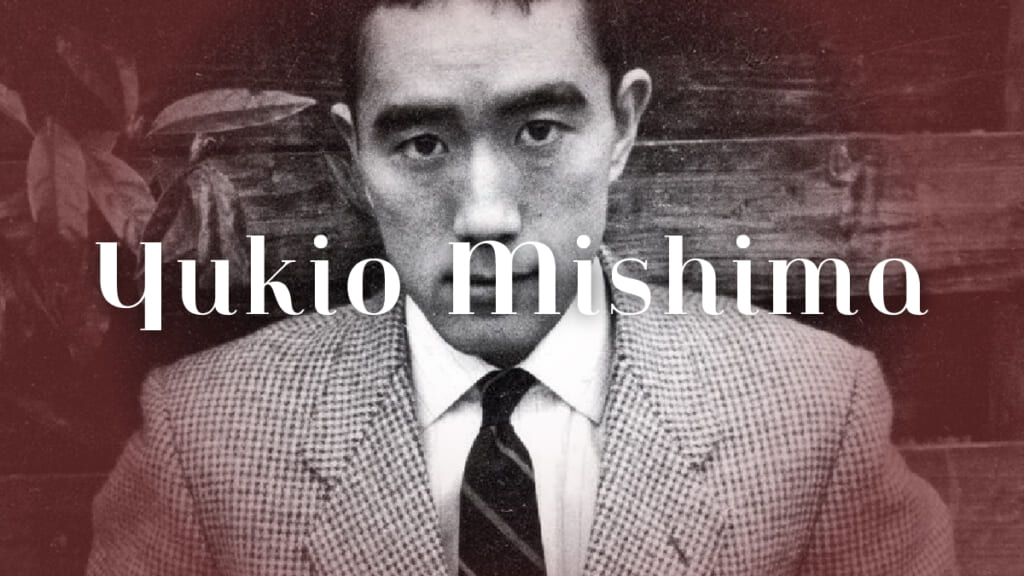



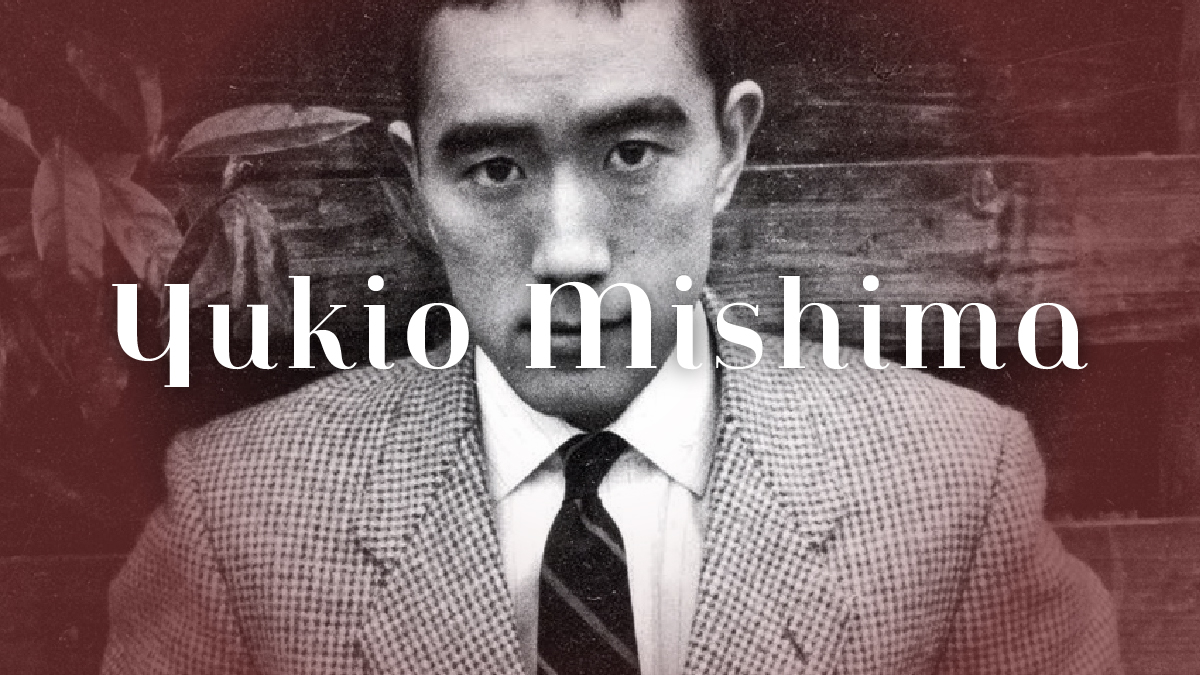


Yukio Mishima | The Novelist Who Published His Conditions for a Wife
PR
 日本語

Yukio Mishima was one of Japan’s defining postwar novelists, the author of Confessions of a Mask, The Sound of Waves, The Temple of the Golden Pavilion, and the Sea of Fertility tetralogy. With his sculpted body and immaculate prose, he held the attention of his age as few writers ever have.
This article sets the literary career aside and follows instead the love and marriage of one man.
What did this writer, who governed himself by so severe an aesthetic, ask of a lifelong partner? Let us trace the unexpectedly quiet private face behind the perfectionism.
His Grandmother’s Room
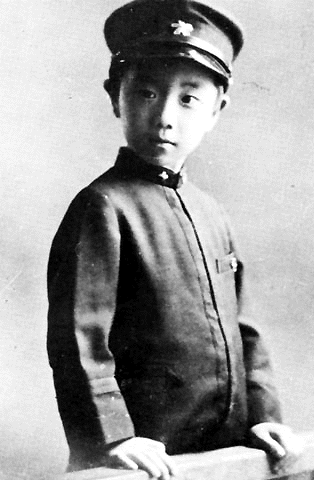
A Boy Among Women
Yukio Mishima was born Kimitake Hiraoka on January 14, 1925, the eldest son of a government official’s family in Yotsuya, Tokyo. His father Azusa was a bureaucrat in the Ministry of Agriculture and Commerce; his mother Shizue came of a line of samurai retainers and scholars. Almost immediately after his birth, the baby was taken into the bedroom of his grandmother Natsu, and there he stayed until he was about twelve, surrounded by serving women.
Natsu, proud of a samurai lineage reaching back to the Tokugawa house, was a woman of high pride and refined artistic tastes. The sickly boy was kept from running about outdoors, and in the sealed air of that room he escaped into the world of words. This childhood, which he later depicted in his reminiscent work The Boy Who Wrote Poetry, became the foundation of his aesthetic sense.
Manuscripts Torn by His Father
When the boy began to write, his father, who despised literature, tore up his manuscripts, while his mother quietly protected them, as Mishima himself later recalled. Records of a boyhood first love are almost nonexistent, and accounts of romance in his youth are scarce as well.
At sixteen he published A Forest in Full Bloom in his school’s literary magazine, and his teacher Fumio Shimizu gave him the pen name Yukio Mishima. The boy who had grown up in a room full of women stepped out, under a new name, into a young man’s season of words and the body.
Words and the Body
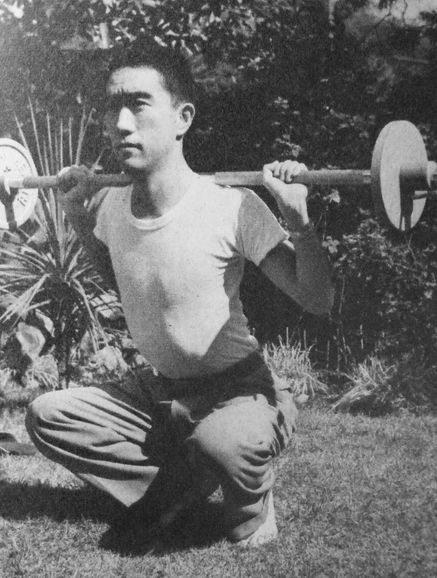
A Novel Called Confessions of a Mask
From Gakushuin he went on to the Faculty of Law at Tokyo Imperial University, graduated at twenty-two, and entered the Ministry of Finance, only to resign the following year. At twenty-four he published Confessions of a Mask, a novel that cast a boy’s inner turmoil in the form of a confession, and it established his position as a writer while he was still young. For all its semi-autobiographical construction, it remains a novel, and the work cannot simply be equated with the life. Fame had arrived, yet any trace of romance in his private life remained faint.
A Body Rebuilt
At thirty he took up bodybuilding, writing himself to Tamari, captain of the Waseda University barbell club, whose photograph he had seen in a weekly magazine, to ask for instruction. The three sessions a week continued for some fifteen years, nearly until his death; his boxing sparring was even captured on 8mm film by his fellow writer Shintaro Ishihara. He later turned to kendo and reached fifth dan at forty-three, and in his autobiographical essay Sun and Steel he reflected on the relation between words and the flesh, so deep did the obsession run.
His life ran on a thoroughly nocturnal rhythm: rising in the early afternoon, giving the afternoon to interviews, visitors, and training, and writing from midnight until dawn. He kept no secretary, managed his crowded schedule entirely himself, and, as his editors’ testimonies agree, never once missed a deadline in his life. A writer who ruled himself so completely would, in time, write out his conditions for a marriage partner with the same clarity as a deadline.
The Woman He Met Backstage
In the summer of his twenty-ninth year, Mishima is said to have met Sadako Toyota, the daughter of an Akasaka restaurant family, backstage at the Kabuki-za. They were together, seriously, for about three years, and she is regarded as the model for Akiko, the married heroine of his novel Shizumeru Taki, and for Masako in his short story “Hashizukushi.” The story rests on her own recollections, told to the researcher Hisafumi Iwashita more than half a century later; no contemporary record of it survives. It is a love that can no longer be verified — but its shadow remains in his fiction.
A Marriage That Began with a Photograph
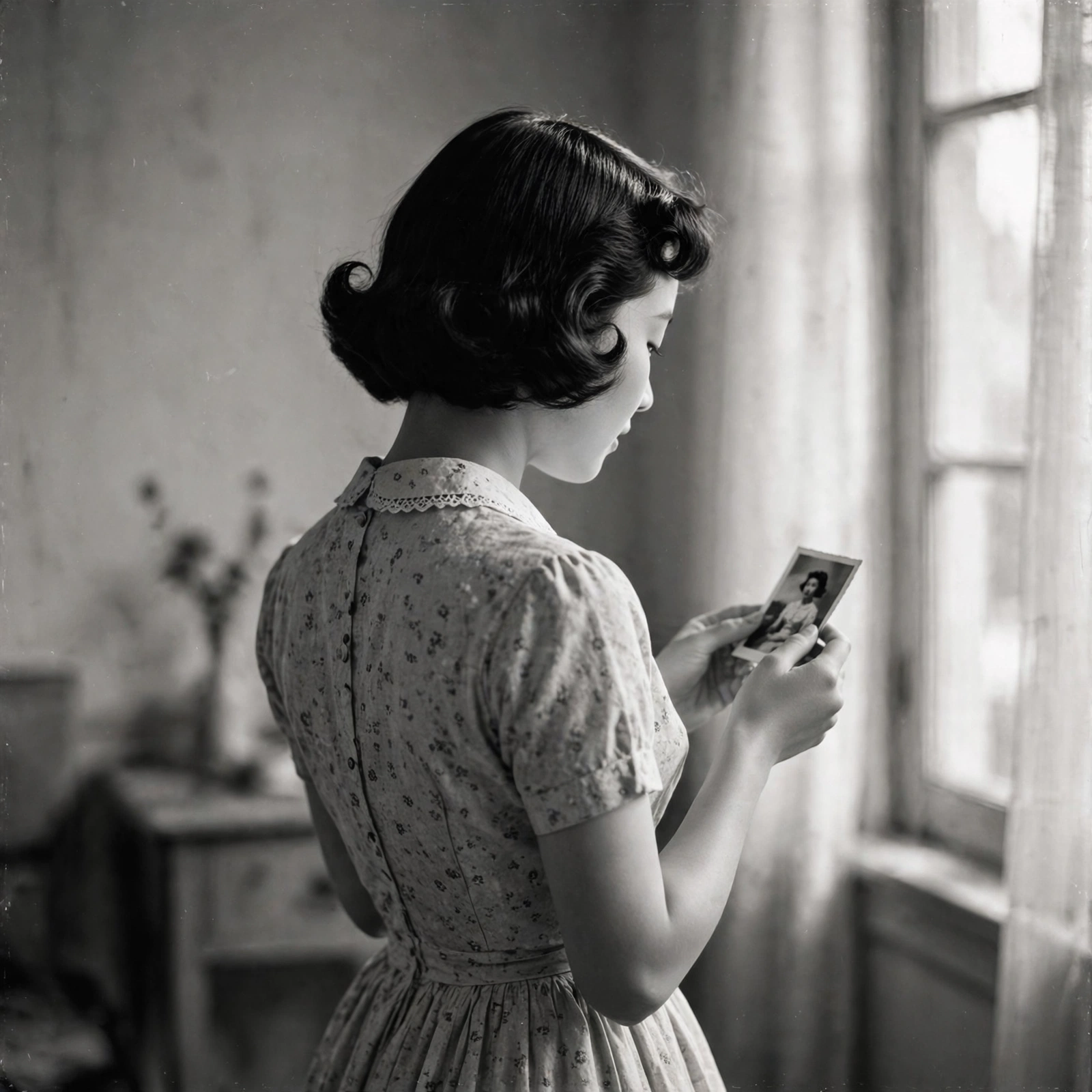
The Published “Conditions for Marriage”
At around thirty-three, in his essay “My Arranged Marriage,” Mishima did something almost unheard of for a writer of his standing: he published, in his own words, the conditions he wished for in a bride. She was to have no interest in literature, to love housework, to cherish his parents, and to be a gentle, womanly person; even wearing high heels she should be shorter than he, with the round, pretty face he preferred; and she was never to intrude upon his work, but to keep the household in perfect order and so support him indirectly. It was a list so frank it looked self-centered, and it may have been his own form of honesty.
At just this time, his mother Shizue fell under suspicion of thyroid cancer and underwent surgery. The result showed it was not cancer, but among those around him spread the view that he had hurried into marriage because of his mother’s illness. In his essay on his mother, he flatly denied it: marriage, he insisted, was in no way something he had undertaken because of her illness.
The year before, as several testimonies record, there had also been an arranged meeting with Michiko Shoda. Regardless of the speculation around him, his own view of marriage and the progress of the matchmaking were quietly moving to the next stage.
One Night at the Ketter
In the spring of his thirty-third year, an acquaintance, Atsuko Yuasa, brought him a matchmaking photograph of Yoko Sugiyama, the eldest daughter of the Japanese-style painter Yasushi Sugiyama. Looking at the portrait, taken in the studio of the photographer Shotaro Akiyama, Mishima liked her face and agreed to meet her. Yoko was twenty-one, a student of English literature at Japan Women’s University.
They met for the first time at the Ketter, a German restaurant in Ginza, and after dinner danced at a nightclub in Aoyama. In the glow of that evening, his liking for her must have become certain; the next day he told the go-between that he was pleased.
Yet at the stage of the two families’ discussions, later testimony says, Mishima once withdrew from the match, apparently put off by an impression that the other family was hurrying it along. What kept the thread from breaking was Yoko’s own strong will to marry, as the go-between recalled in later years. The writer who had hesitated was moved, it seems, by a strength of core in her that was anything but merely quiet and retiring.
The talks advanced again, the engagement was settled, and a diamond ring was presented at the formal exchange of gifts. The wedding was held at Meiji Kinenkan, with the novelist Yasunari Kawabata and his wife as go-betweens, and the reception at the International House in Azabu. Yoko, who left university upon her marriage, set out with him on a honeymoon of some two weeks through Hakone, Atami, Kyoto, Osaka, Beppu, and Hakata.
From the road, in an English letter to his American publisher, Mishima proudly introduced his new wife. The man who had listed his ideal conditions, and the young woman who had pulled a nearly broken engagement back with her own will, thus stepped into their new life as husband and wife.
The House in Magome
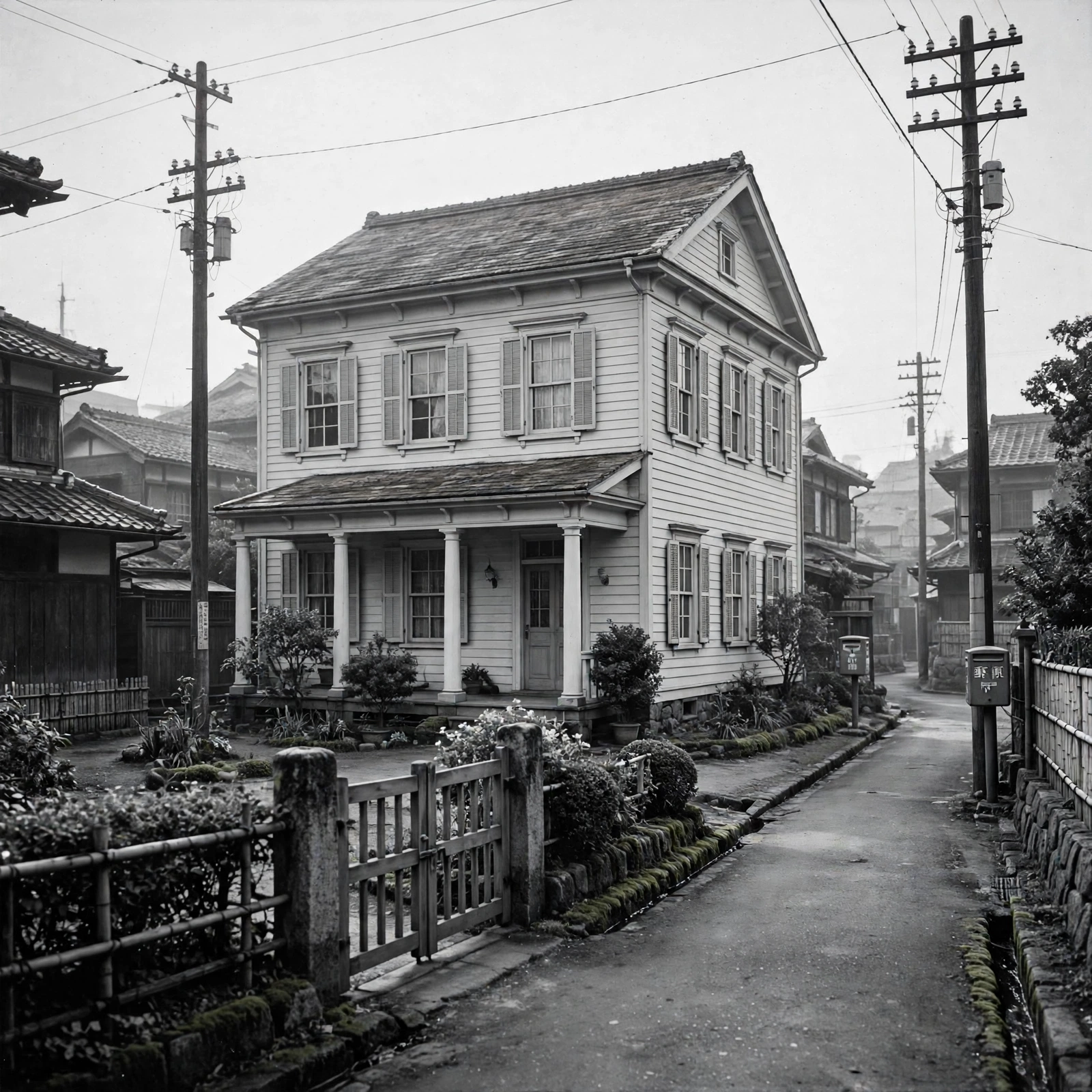
The Wife Who Ran the House
After a start in his parents’ home in Midorigaoka, Meguro, the couple moved the following year to a new house in Magome, Ota City, Tokyo. His parents lived in a separate wing on the same grounds. A daughter, Noriko, was born when he was thirty-four, and a son, Iichiro, when he was thirty-seven. The days of the growing household were run by Yoko.
She handled callers and household affairs with competence, and for several years it was the family’s custom to hold Christmas parties at home, where she entertained guests with her own cooking. Her husband never drove, though he held a license, so the driving too was her role. She supported from the very ground of daily life the writing routine he never broke: home by eleven at night without fail, a late dinner, and then the three pages of serious fiction he had fixed as his daily quota.
Mishima, for his part, took Yoko with him on his reporting journeys, a trip around the world, Southeast Asia, and India, and every August the whole family stayed in Shimoda. Breathing foreign air and the summer sea breeze, even the writer of strict rules may finally have let his shoulders drop.
The Laughing Husband, the Husband on Stage
The face he showed at home and among those close to him differed somewhat from the image of a literary master shut in his study. He was known for a distinctive roaring laugh, and family recollection tells of him chasing visiting children around the house with a playful growl to delight them. His strictness about time, meanwhile, was thorough in daily life too: the artist Tadanori Yokoo recalled being scolded for arriving two or three minutes late, and then, arriving fifteen minutes early the next time, finding Mishima already waiting and being scolded again.
He also loved the public stage. He starred in the film Afraid to Die and sang its theme song, which he had written himself; he directed, scripted, and starred in the film adaptation of his own story Patriotism; and in the period film Hitokiri he played a Bakumatsu swordsman, a figure almost unimaginable from the sickly boy shut in his grandmother’s room.
A Work Bearing His Wife’s Name
In July of his forty-fifth year, within a household whose order the couple had kept so carefully, the wife stepped forward with a work under her own name. Les Petites Filles modèles, the children’s book by the Comtesse de Ségur that Yoko had co-translated with Fumiko Matsubara, was published and won the Shogakukan Children’s Literature Award. The preface and the supervision of the translation were Mishima’s own work.
The husband who had once written that he wanted a wife with no interest in literature who would never intrude on his work had now lent his strength to a translation bearing his wife’s name. A marriage that began with a published list of conditions had matured, it seems, into a relationship in which he naturally recognized her talent. To a couple who supported each other while each kept faithfully to their own domain, the season of an unavoidable parting was drawing near.
The Last Morning, and the Wife Who Remained

A Parting at Forty-Five
On the morning of November 25, 1970, Yoko drove the children to school as she always did. On her way to riding practice, remembering an errand, she telephoned home, and Mishima, who answered, replied only briefly. That ordinary morning exchange became, in the end, the couple’s last conversation.
At midday that day, at the Self-Defense Force garrison in Ichigaya, Mishima took his own life. He was forty-five. After the sudden parting, one can only guess at the tension in the heart of the wife left behind in the house in Magome, its master gone.
Why did he choose death? The reason he himself proclaimed publicly was protest. The manifesto distributed at the garrison protested the state of postwar Japan and called on the Self-Defense Forces to rise up.
Yet biographies point out that this death was no impulse; it had been prepared over many years. For a man who found beauty in a trained body and in youth, the decay of age may have been something he could not accept. The final manuscript of the Sea of Fertility tetralogy was delivered to his publisher that very morning, which itself tells the length of the preparation. The prevailing view is that, while it took the form of protest, it was a death his own philosophy of life and death had quietly been preparing all along.
The Woman Who Kept the House
Yoko’s years afterward were spent attending to the aftermath and protecting what her husband had left behind. She painted, under the name Yoko Mishima, the cover art for the final volume of the Sea of Fertility, The Decay of the Angel, and she devoted herself to compiling bibliographies and to organizing and preserving his books and manuscripts. The Mishima house was kept exactly as it had been in his lifetime, and it later came to light that the negative of the film Patriotism, which was supposed to have been burned, had been secretly kept by her at home.
Twenty-five years after her husband’s death, Yoko died at fifty-eight, of acute heart failure caused by pulmonary mycosis. On the foundation of the archive she had preserved, the Mishima Yukio Memorial Museum opened on the shore of Lake Yamanaka four years later still. In the form of protection, her marriage had continued.
What Was Yukio Mishima’s View of Love?

For Mishima, who had built a castle of words in a closed room and kept any hint of romance at a distance into his young manhood, marriage at first resembled a contract, spelled out in writing to protect his aesthetic and the discipline of his writing. That, presumably, is why he needed to publish beforehand his condition of a partner who would take no interest in literature and never intrude upon his work.
Yet as he shared his days with the wife who had walked toward him by her own will, his view of love seems to have changed, beyond the frame of a helpmeet, into a trust in which two people respect each other’s domains while living the same ordinary life. In the figure of the man who traveled the world with her and, in time, wrote a preface for her translation and recognized her talent, there seeps a quiet affection that no logic of conditions could ever divide up.
Behind the perfect mask, Yukio Mishima may have longed, more than anyone, for the unshakable warmth of the everyday. The man who wove his life from severe discipline and aesthetics was, it seems, one who kept beside his inviolable solitude the single partner he could trust.
Related Books | Dive Deeper into Yukio Mishima
This page contains affiliate links. If you buy through them, Love Legends may earn a commission at no extra cost to you.
スクロールできます

Mishima: A Biography (John Nathan)
The standard English biography by a man who knew Mishima personally — his household, and the road to his final act.

The Life and Death of Yukio Mishima (Henry Scott Stokes)
A British journalist who knew Mishima tells his life and death with a reporter’s eye.

Mishima’s own essay on remaking his body — the other half of a writer who lived his words.

The opening novel of his final tetralogy — a young love and its ruin, completed the morning he died.
Related Articles
-
 Victor Hugo and Adèle: The Wife He Never Left, the Mistress He Called “His Widow”
-
Tolstoy and Sophia: A Marriage That Began With a Diary of Sins
-
The Grimm Brothers and the Quiet Loves Behind Their Fairy Tales
-
Osamu Dazai’s Love Life Between Passion and Death
-
Lord Byron’s Scandalous Love Life and His Dangerous Romances
-
Dante’s Lifelong Love for Beatrice, the Muse of The Divine Comedy
-
Hemingway’s Four Marriages and the Women Behind His Novels
-
Anne Frank’s First Love for Peter in the Secret Annex




More love stories
-
The Grimm Brothers and the Quiet Loves Behind Their Fairy Tales
-
Shakespeare’s Love Life, from Anne Hathaway to the Dark Lady
-
Lord Byron’s Scandalous Love Life and His Dangerous Romances
-
Ikkyu and His Late-Life Love for the Blind Singer Mori
-
Sakamoto Ryoma and Oryo, the Wife Who Saved His Life
-
Napoleon and Josephine, the One Woman the Emperor Could Not Possess


New post
-
Yukio Mishima | The Novelist Who Published His Conditions for a Wife
-
Victor Hugo and Adèle: The Wife He Never Left, the Mistress He Called “His Widow”
-
Tolstoy and Sophia: A Marriage That Began With a Diary of Sins
-
Van Gogh’s Love Life and His Unfulfilled Longing for Marriage
-
The Grimm Brothers and the Quiet Loves Behind Their Fairy Tales
-
Schrödinger’s Love Life Was as Unconventional as His Famous Cat