



Victor Hugo and Adèle: The Wife He Never Left, the Mistress He Called “His Widow”
PR
 日本語
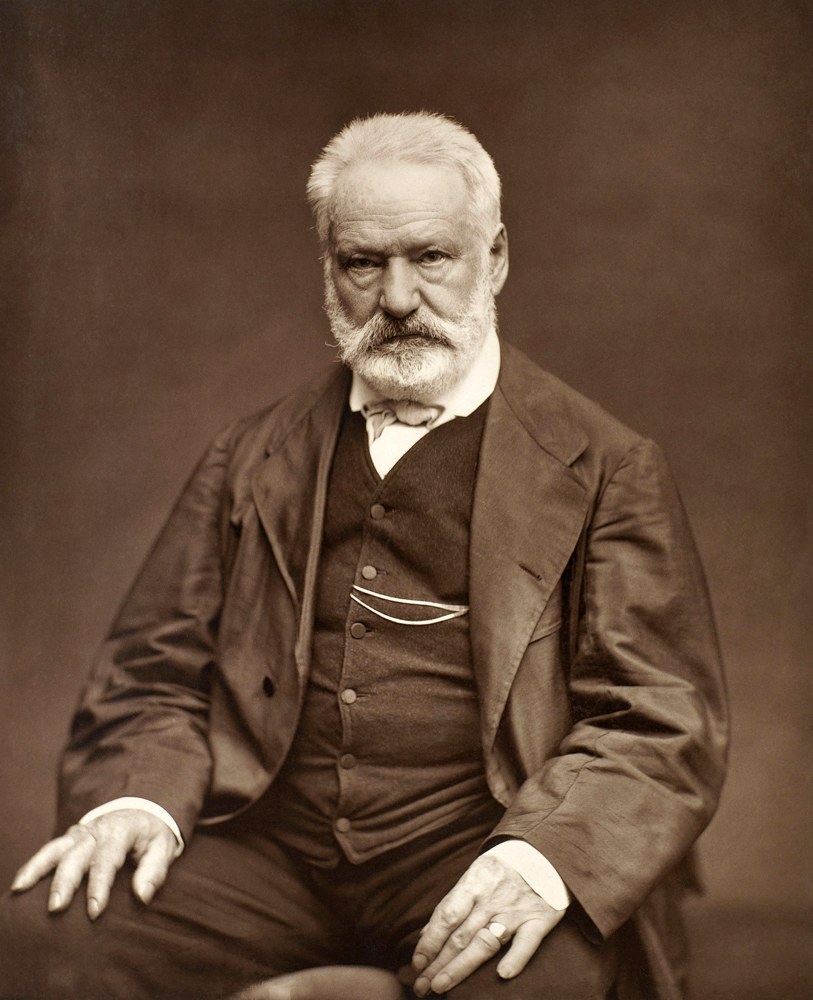
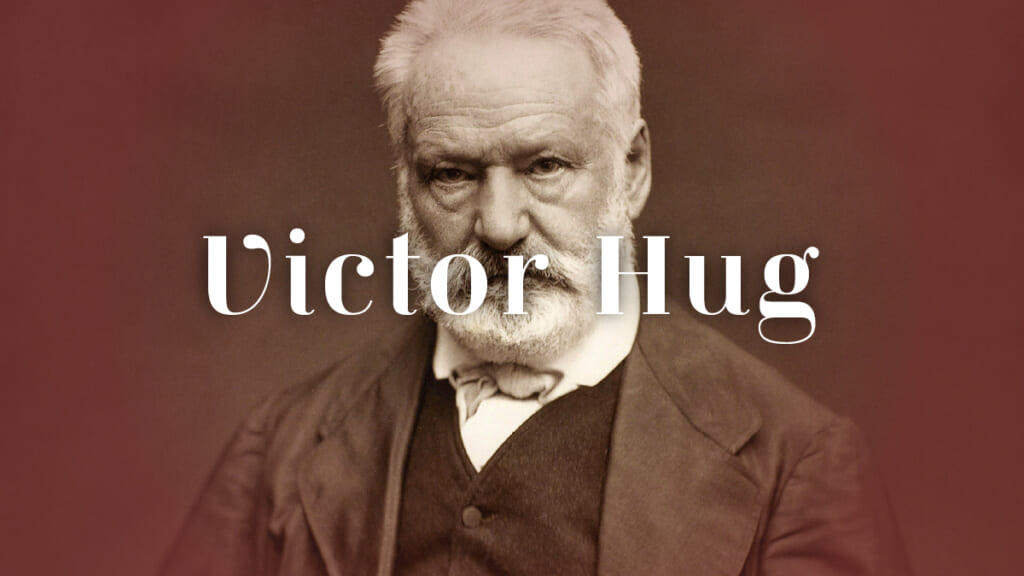
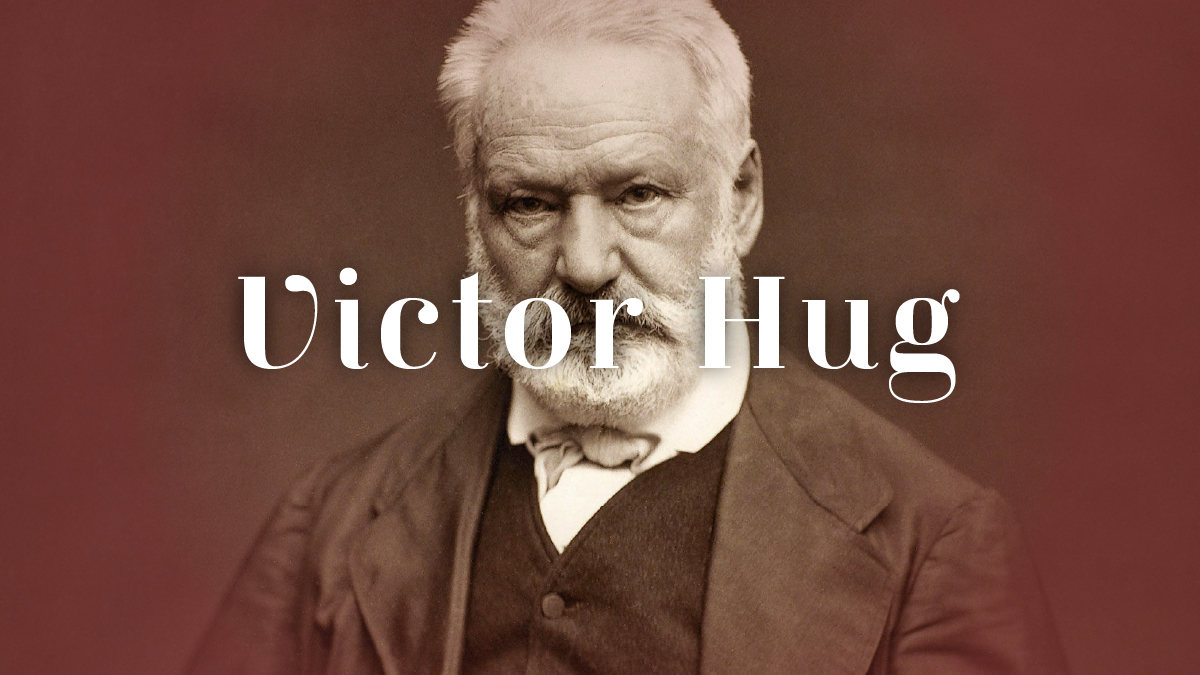
Victor Hugo.
The author of Les Misérables and Notre-Dame de Paris, he stands at the summit of French literature. Recognised as a poet while still young, fêted as a playwright and novelist, he was sent off with a state funeral and had become, by the end, something close to a national monument. His life, in a sense, is the literary history of a country.
And yet this same man had a quieter, more complicated face. Why did a man who married his first love go on being unsettled by love for the rest of his life? The answer lies scattered across his years.
In this article, we step back from Hugo the monument and the theories of his work, and follow him from childhood to old age, reading his life for one thing: what he believed about love.
Whom did he love, and in what shape did that love run through his whole life? We hope you will stay with this long, quiet trajectory.
A Mother’s House, a Father’s War
Between Parents Being Torn Apart
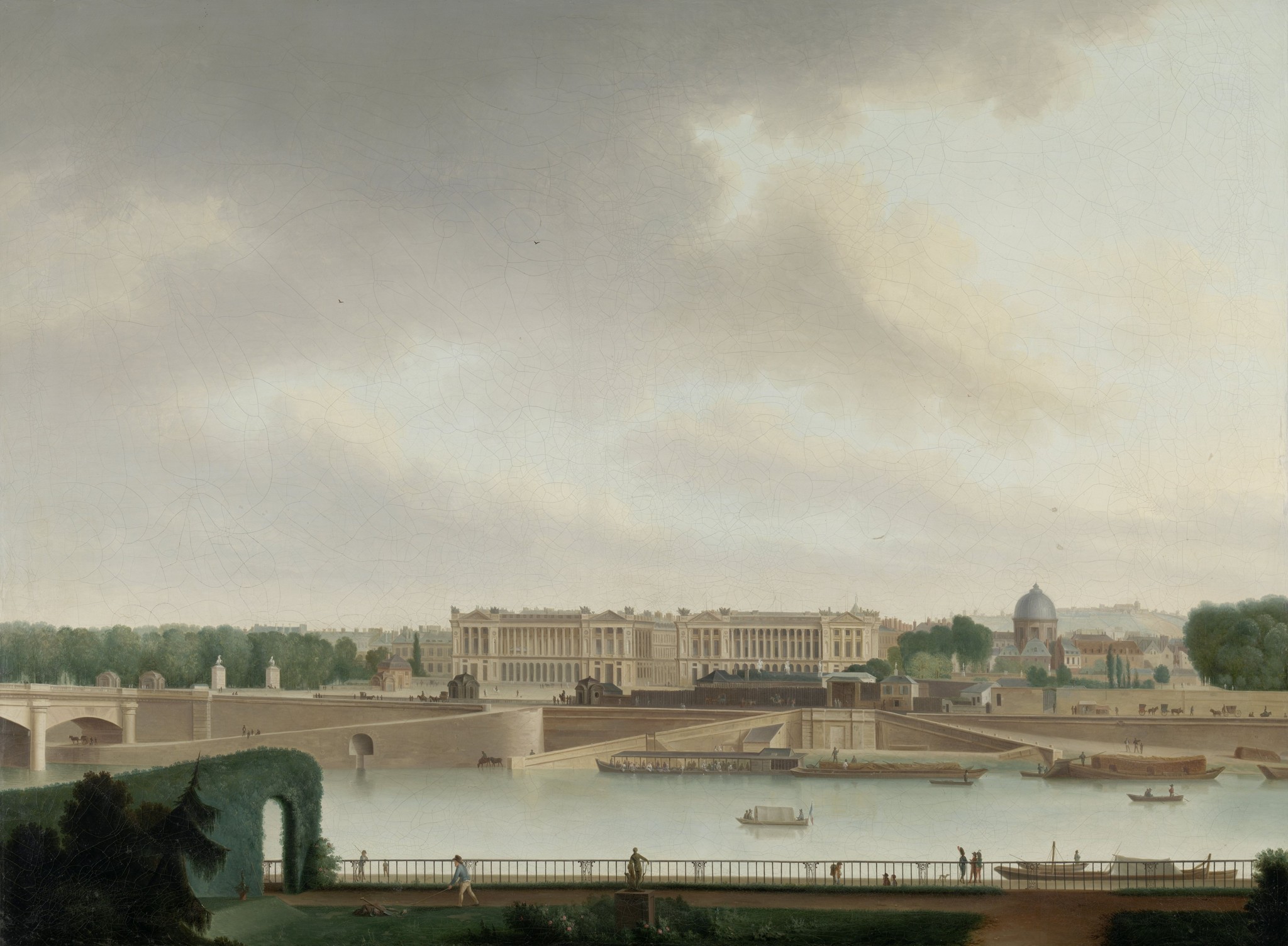
Hugo was born in 1802 in Besançon, where his father was posted. Léopold Hugo was a soldier in Napoleon’s army who would rise to general; his mother Sophie came from a family of royalist sympathies. He was born into wartime — and into a household at war with itself.
His parents disagreed in politics and in temperament, and in time they were effectively living apart. The children grew up travelling between their father’s postings in Italy and Spain and their mother’s house in Paris. One family, two places to come home to. The sight of a marriage slowly ending must have burned itself into the boy’s eyes as ordinary scenery.
A Resolve to Live by Poetry
His schooling was left to boarding schools and tutors, but his real school was poetry itself. At fifteen he won a prize in the Académie française’s poetry competition; at seventeen he took another at Toulouse. By then, his resolve to live by literature was already set.
And his first love did not have to be looked for far away. Right beside him was a girl he had played with since childhood, whose family and his had grown up entwined.
A First Love Made to Wait
Letters Signed “Your Husband”
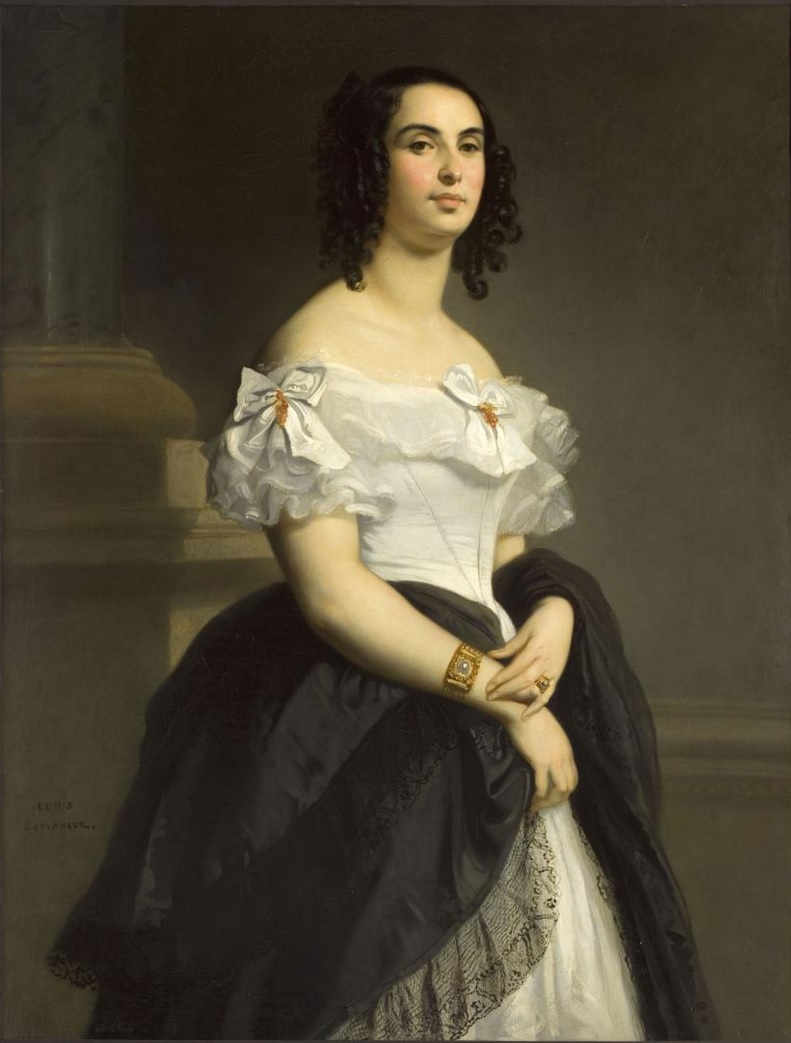
In the days when the family lived in the Feuillantines quarter, the three Hugo brothers and the children of their neighbours the Fouchers were constant playmates. Among them was Adèle, a civil servant’s daughter. As they reached adolescence, the childhood friendship quietly turned into love. In the first letter Hugo wrote her, at about seventeen, he had already signed himself “your husband.” Before any promise of marriage — at the stage of a mere confession — he already meant it for life.
But the road to marriage was closed. His mother opposed it fiercely. The two could barely meet; a secret correspondence was their only thread. Then his mother died, in the year he turned nineteen. The following year, Hugo, twenty, married Adèle, nineteen. The long-waited first love had finally borne fruit.
Five Children, and a Quietly Widening Distance
Hugo had known no other woman before his marriage, and married life began passionately, with many letters between them. Children followed one after another. The first son died in infancy, but four children grew up, beginning with their daughter Léopoldine, and within eight years of the wedding they were parents of five.
Then, around the time their youngest daughter was born, something changed on his wife’s side. To avoid another pregnancy, Adèle seems to have withdrawn from marital relations. In those days there was no reliable contraception; after five births, her decision was hardly an unreasonable one. Her distance, and her husband’s undiminishing passion: the difference in temperature became the quiet crack in the house.
It was not that he looked for somewhere else to put his passion. In this period he threw himself into his work with a strange intensity. He would lock his outdoor clothes away in a cupboard, wrap himself in a large grey shawl, and shut himself up with the manuscript of Notre-Dame de Paris. In literature as in love, he seems to have been a man who could only do one thing: plunge in completely.
A Friend’s Confession
Beside that crack stood another man who knew the inside of the house well. The critic Sainte-Beuve was Hugo’s closest friend, and godfather to his youngest daughter. And this man confessed to Hugo himself that he loved Adèle. Hugo, it seems, gently talked his friend down.
Afterwards Sainte-Beuve quietly gathered his poems to her and hid the love in an autobiographical novel. The correspondence between Adèle and Sainte-Beuve was later burned at the wish of both families and does not survive. How far the relationship between them went is something scholars still disagree about today. The letters show that a deep emotional bond existed; beyond that, no one can say for certain.
In a Corner of the Rehearsal Room
A Princess with Only a Few Lines
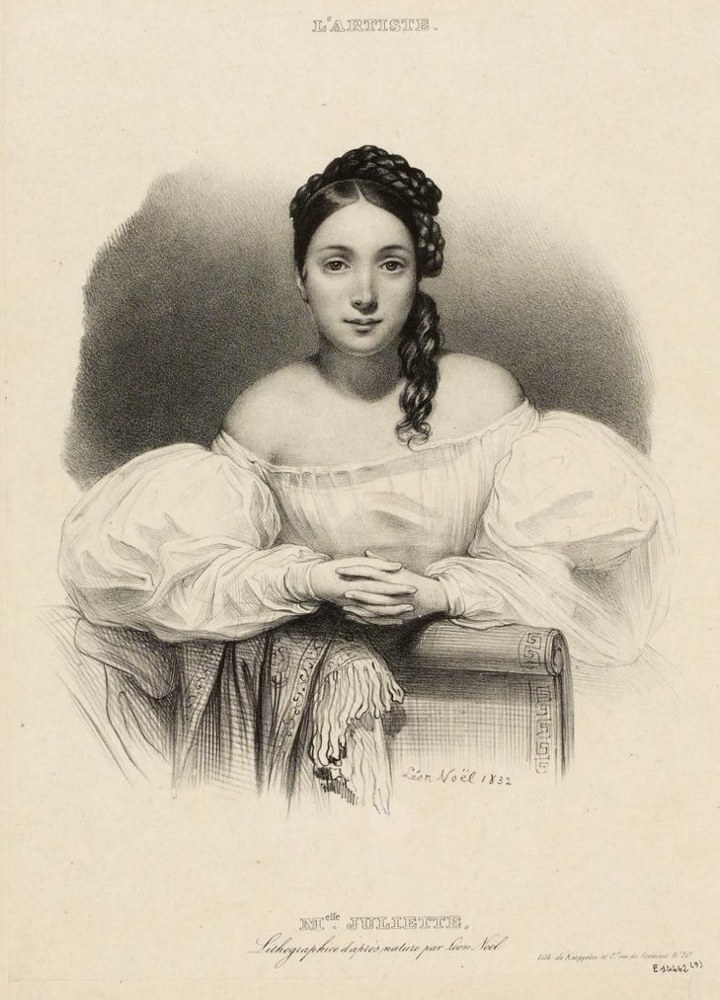
On the day the thirty-year-old Hugo held a reading of his new play Lucrèce Borgia, the actress Juliette Drouet was among the cast gathered for it. The part she had been given was Princess Negroni, a role with only a few lines. Known until then as the lover and model of a sculptor, by whom she had a daughter, she was still a small presence on the stage.
Two weeks after the opening night, the two had become lovers. Hugo set her up in a home and supported her, and in his next play he wrote a part for her. In the Paris of the time, there was nothing unusual in a successful playwright taking an actress as his mistress. Actresses stood outside “respectable” society, in a world where it was hard to live without a protector.
And Adèle — did she say nothing? Marital relations between husband and wife had already ended for reasons on her side, and as the mother of the children she went on keeping the house, seemingly without ever contesting the arrangement in the open. In Hugo’s life, the official household and another life now ran side by side.
The beginning was an everyday scene in the Paris of those days. What was not everyday was that this relationship went on from there for fifty years.
The Date February 16
Juliette all but gave up the stage and stayed beside him for life as the copyist and secretary of his manuscripts. The letters she kept sending him reached an enormous number. The two treated February 16, the night they became lovers, as a kind of wedding anniversary, and celebrated it every year without fail.
But this devotion was not an equal thing. He demanded fidelity of her strictly, while he himself was not always faithful. Her letters hold a great deal of a heart suffering from jealousy.
In those years, deep grief also visited the house. Léopoldine, the daughter he doted on, drowned in the Seine with her husband. The grief of the forty-one-year-old father was profound. And in the same period, his desire was turning toward a scandal from which there would be no coming back.
Privilege and Prison
The Woman Who Went to the North Pole
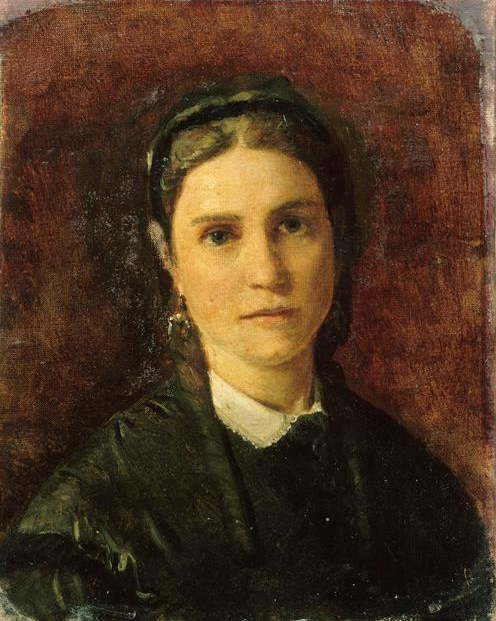
In his early forties, at the salon of a Paris hostess, Hugo met Léonie d’Aunet. The wife of a painter, she was already known as the woman who had accompanied an Arctic expedition and become the first European woman to set foot on Spitsbergen.
Léonie must have stood out among the women gathered in that salon. A woman who had crossed the polar sea and seen a world of ice. Her unbending strength of will must have been something new to a man whose power lay in words. Her own marriage had already gone cold, and she was seeking a separation — that, too, drew them together. In time the two became lovers, and their meetings continued.
The Raid on the Passage Saint-Roch
A turning point came for Hugo at forty-three, just made a peer of France. Léonie’s husband, suspecting his wife’s infidelity, went with the police and raided a rented room in the Passage Saint-Roch in Paris. Inside, Léonie and Hugo were in the middle of their rendezvous. The two were caught in the act of adultery.
Hugo showed his parliamentary immunity and was able to leave the scene untouched. The price was paid by Léonie alone. She was arrested and sent to prison, and after spending about two months there, she lost custody of her two children as well.
But the affair had a sequel. To the convent where Léonie had taken refuge, Adèle — the wife — came in person to visit and console her, so it is told. The lawful wife walked in to comfort the woman imprisoned as her husband’s mistress. It is said to have been rivalry toward Juliette that moved her; her true motive is unknown.
Letters between them continued after her release, but when he left the country for exile, their relationship came to an end.
The Island of Exile, Guernsey
The Woman Who Saved His Life
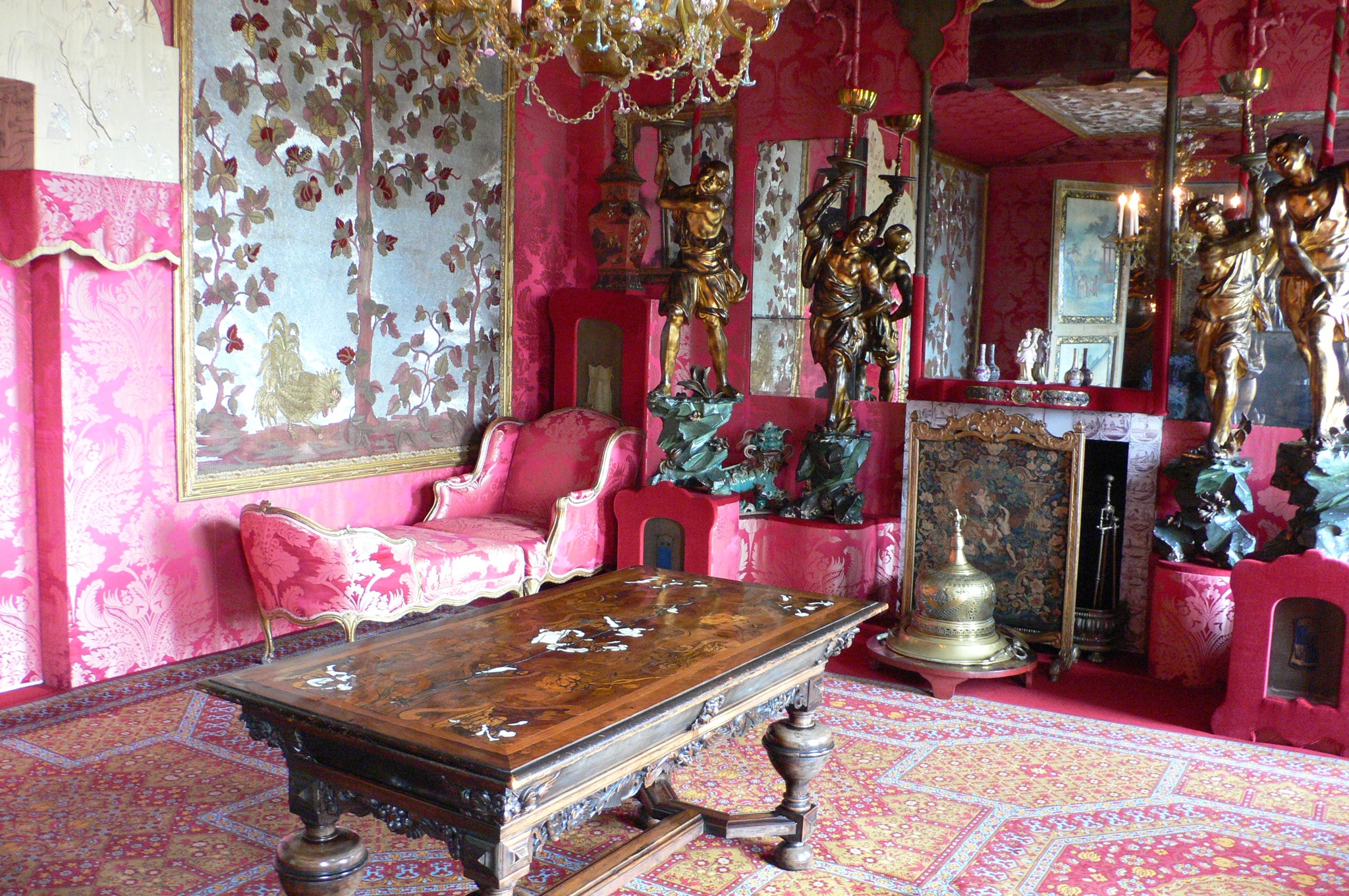
In his forty-ninth year, Hugo, who had opposed Napoleon III’s coup d’état, became a hunted man and fled Paris. The one who supported that flight was his mistress, Juliette. The false passport arranged, the hiding places secured. She always made his escape possible, there beside him.
On the island of Jersey, where he had fled, he met what seemed to be the spirit of his dead daughter Léopoldine. He threw himself into the strange séances in which the tapping of a table’s legs spelled out words. The sittings numbered over a hundred, and he dutifully wrote down every one of those conversations in his notebooks.
A Wife’s Death, and the Word “Widow”
While the exile continued, his wife Adèle died in Brussels. Hugo, a wanderer, could accompany her coffin only as far as the border, and could not even attend the funeral.
As he saw the coffin off at the border, Hugo is said to have entrusted a message for his daughter Léopoldine to his friend Paul Meurice, who was to speak at the graveside: “Tell my daughter that, while I wait, I am sending her mother first.” And in a letter answering condolences, he wrote that her soul “sees that I weep, and knows that I hope.” The life of husband and wife had ended long before, and he had spent half a lifetime with another woman — yet his first love’s death made him weep quietly.
About two years later, in the midst of the siege of Paris, the sixty-eight-year-old Hugo left instructions for his children, and wrote of Juliette:
“She saved my life in December 1851. She endured exile for my sake”
And he concluded:
“Her soul has never left mine. She is my widow”
To a woman who in the family register was nobody at all, he had given the place of his widow.
And yet, three years after this declaration, his weakness showed its face again. When it became known that the seventy-one-year-old had taken up with Juliette’s own maid — of all people — she left the house. Five days later she returned, and he is said to have promised fidelity. Even so, their relationship continued until her death.
The Last New Year’s Card
Back in Paris after his return, he aged into a national monument. At the festival just before his eightieth birthday, hundreds of thousands of people marched beneath the windows of his house and threw flowers up at them. The street was renamed Avenue Victor-Hugo in his lifetime. Another of his pleasures in those days was what he called his “travelling balcony” — viewing Paris from the roof seat of an omnibus.
In his old age, too, his private notebooks continued their habit of recording assignations with women in code. The ciphers, mixed with Spanish and other languages, were a device so that Juliette, who lived with him, could not read them, so it is said. Inside an idol worthy of a state funeral, an old man’s desire kept quietly flickering.
Then, on New Year’s Day, just before his eighty-first birthday, Juliette’s last card arrived. She had a custom of sending him, every New Year, a letter she called her “certificate of life.” That year’s read:
“I do not know where I shall be this time next year. But I am happy and proud to sign my certificate of life for this year with this single word: I love you”
About four months later, Juliette died in Paris. It was a parting fifty years after the night they had become lovers. Two years later, in 1885, Hugo died in Paris and was laid in the Panthéon with a state funeral.
What Victor Hugo Believed About Love
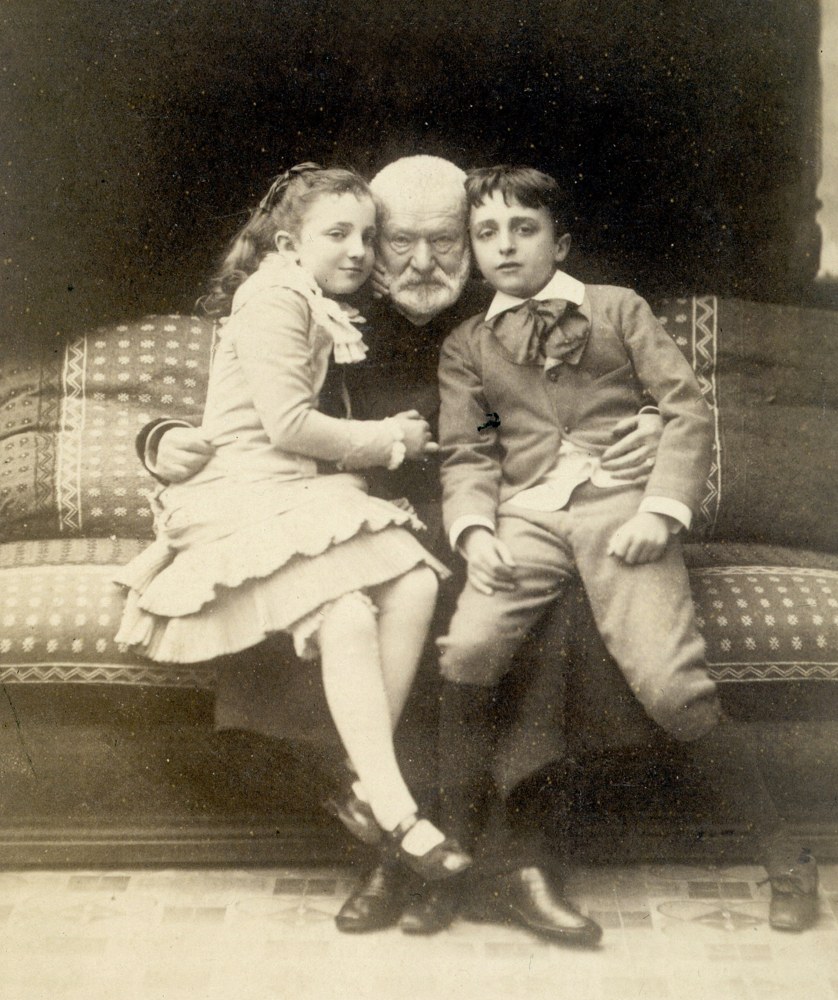
Hugo’s love was not a matter of choosing, but of never cutting — an accumulation of bonds unsevered. The childhood sweetheart he married after being made to wait; the companion he met in a rehearsal room and stayed beside for half a century; and the women who were made to pay the price. He was passionate, vainer than most, astonishingly honest about his own desires — and he would not let go, to the very end, of a bond he had promised.
Desire without limit, bonds without term — for him, love was not the exclusiveness of narrowing it down to one person, but the permanence of never ending a bond once made, I think.
Come to think of it, at the end of Les Misérables he wrote: “To love another person is to see the face of God.” Perhaps, for him, God was never just one — there could be any number of them.
Related Books | Dive Deeper into Victor Hugo
This page contains affiliate links. If you buy through them, Love Legends may earn a commission at no extra cost to you.
スクロールできます

Victor Hugo: A Biography — Graham Robb (W. W. Norton)
The award-winning standard biography: Hugo the poet, politician, exile and lover, drawn whole — including the wife, the mistress and the scandals, unsparingly and with wit.

My Beloved Toto: Letters from Juliette Drouet to Victor Hugo 1833–1882 (SUNY Press)
Juliette Drouet wrote to Hugo almost daily for fifty years. These letters — devoted, jealous, funny — are the inside record of the great affair.

Les Misérables (Penguin Classics, trans. Norman Denny)
The novel of Valjean and Cosette, finished in exile on Guernsey — the book whose closing line ends this article: love as seeing God’s face.

Notre-Dame of Paris (Penguin Classics, trans. John Sturrock)
Written behind locked doors and wrapped in a grey shawl: Quasimodo’s hopeless love and Frollo’s burning obsession in the young Hugo’s breakthrough novel of Paris.

Related Articles
-
 Tolstoy and Sophia: A Marriage That Began With a Diary of Sins
-
The Grimm Brothers and the Quiet Loves Behind Their Fairy Tales
-
Osamu Dazai’s Love Life Between Passion and Death
-
Lord Byron’s Scandalous Love Life and His Dangerous Romances
-
Dante’s Lifelong Love for Beatrice, the Muse of The Divine Comedy
-
Hemingway’s Four Marriages and the Women Behind His Novels
-
Anne Frank’s First Love for Peter in the Secret Annex
-
Shakespeare’s Love Life, from Anne Hathaway to the Dark Lady






Popular articles
-
Louis XIV and the Mistresses of the Sun King’s Court
-
Napoleon and Josephine, the One Woman the Emperor Could Not Possess
-
The Enlightened Emperor Joseph II and His Devotion to His Lost Wives
-
Osamu Dazai’s Love Life Between Passion and Death
-
Anne Frank’s First Love for Peter in the Secret Annex
-
Sakamoto Ryoma and Oryo, the Wife Who Saved His Life

New post
-
Victor Hugo and Adèle: The Wife He Never Left, the Mistress He Called “His Widow”
-
Tolstoy and Sophia: A Marriage That Began With a Diary of Sins
-
Van Gogh’s Love Life and His Unfulfilled Longing for Marriage
-
The Grimm Brothers and the Quiet Loves Behind Their Fairy Tales
-
Schrödinger’s Love Life Was as Unconventional as His Famous Cat
-
Picasso and the Women Who Fueled His Art