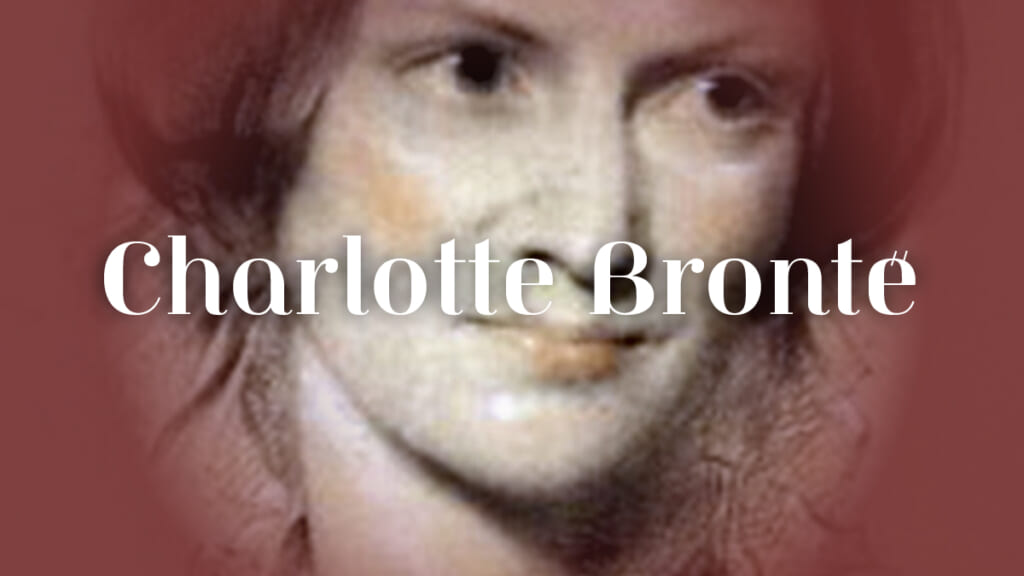

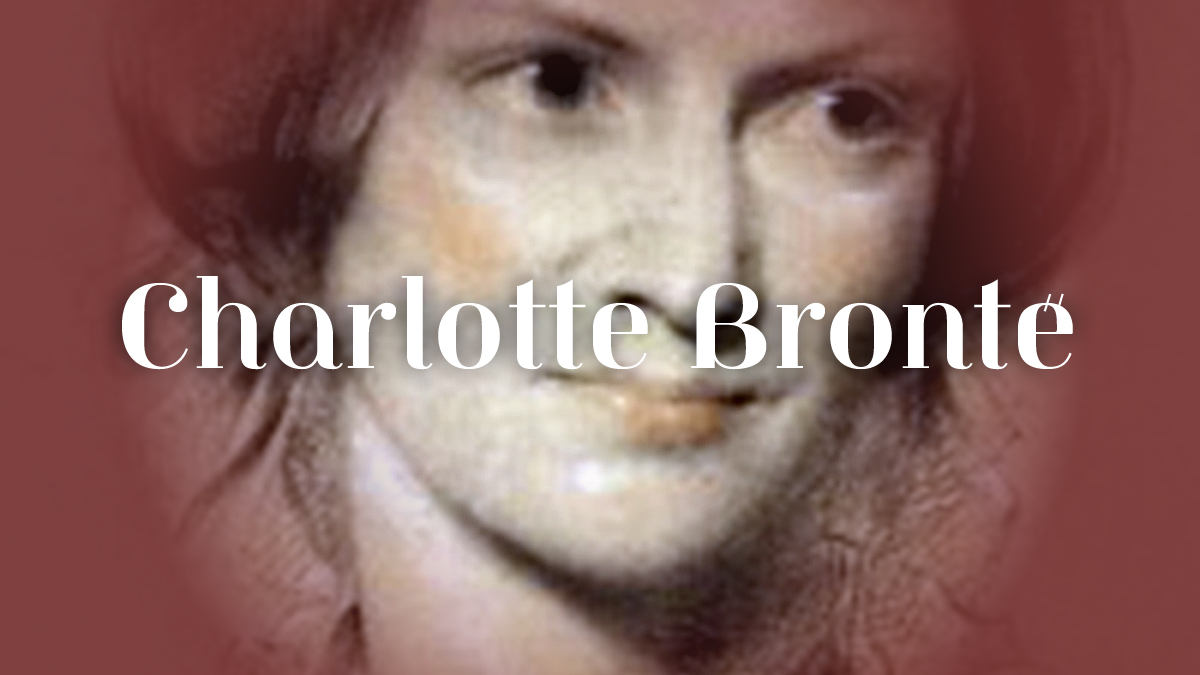


Charlotte Brontë | The Novelist Who Dreamed of Fierce Love and Chose a Quiet One
PR
 日本語

Charlotte Brontë is one of the defining novelists of English literature, known above all for Jane Eyre. In that novel she wrote, without surrendering her heroine’s pride, a love story of two equal souls — and her writing still holds readers today, long after her own lifetime.
But this article is not about the history of her works. It follows the love and marriage of one woman, in her real life.
What did the woman who wrote such noble love in fiction believe in, and what did she choose, when love and marriage stood before her in reality? Let us trace the other face of a writer who lived with quiet passion and an unshakable will.
The Parsonage in Yorkshire

A Clergyman’s Daughter on the Moors
Charlotte Brontë was born on 21 April 1816 in Thornton, in the north of England, the third of six children of Patrick Brontë, an Anglican clergyman, and his wife Maria. When she was four, the family moved to the parsonage at Haworth. It was a remote parish, and a clergyman’s standing came with only a modest income. When Charlotte was five, her mother died of illness, and Maria’s sister — the children’s aunt — took over their upbringing.
To Cowan Bridge
When Charlotte was about eight, she left the parsonage with her sisters for the Clergy Daughters’ School at Cowan Bridge. The school’s conditions were wretched, and within a year her eldest sister Maria and her second sister Elizabeth had died of consumption. Losing her sisters left a deep scar, and the school would later become the model for the girls’ school in her novel.
Kingdoms of the Imagination
Back home, Charlotte lost herself, together with her brother and sisters, in writing the tales of imaginary kingdoms — Glass Town and Angria — in tiny booklets of a few centimetres, sewn together and filled with miniature script. In those pages she wrote love story after love story, full of passion. In real life, love was still a long way off.
A Working Daughter

Teacher and Governess
In her mid-teens, at Roe Head School, Charlotte met Ellen Nussey, who would become her lifelong friend. She later taught at the same school, and then worked as a live-in governess in several households — but none of it was what she wanted. For a woman with so sharp and critical an eye, life in an employer’s house, with no place she could call her own, must have been stifling.
The Proposal Letters
At twenty-three, two proposals of marriage arrived in quick succession. The first came from Henry Nussey, her friend’s elder brother. Charlotte refused him plainly, both in her reply to him and in a letter to Ellen, for one reason: she did not love him. In the letter to her friend, she set down without hesitation what she required of marriage.
“I had not, and never could have that intense attachment which would make me willing to die for him — and if ever I marry, it must be in that light of adoration that I will regard my husband.”
The same year brought a second proposal, from David Pryce, a young Irish clergyman who had only just visited the parsonage. He proposed on the strength of a single meeting, on the evening of the day he arrived; Charlotte sent her refusal a few days later. In her letter to Ellen she reported the episode with a laugh — she had heard of love at first sight, she wrote, but this surpassed it. Even in the middle of unwelcome work, her dry wit never left her.
Her principle never wavered: however much security a match might offer, she would not marry without love. Yet the woman who had twice calmly turned down real proposals would, a few years later, in a foreign country she had crossed to for the sake of her independence, find her heart drawn to someone entirely different.
The Brussels Classroom

The Master
At twenty-six, Charlotte travelled with her sister Emily to the Pensionnat Heger in Brussels, to learn the languages she needed to stand on her own feet as a teacher. The man who taught literature and rhetoric there was Constantin Heger — the husband of the school’s proprietors, and a married man. His devoted way of correcting and guiding his pupils’ compositions became the starting point of a deep bond of master and pupil, and of Charlotte’s longing for him.
After their aunt’s death took Emily back to England, Charlotte remained in Brussels alone, teaching English. The lonelier her days in an unfamiliar classroom abroad, the larger the master who engaged so earnestly with her words must have loomed in her heart.
Letters After Her Return
She came home to Haworth in the winter of her twenty-seventh year, but her heart remained bound to Brussels. From then on, only letters crossed the sea between them; four of hers to her master, written in French, still survive. Replies from Heger were few, and a relationship of waiting quietly moved towards its end.
A letter written in the winter of her twenty-eighth year, read in translation, lets her longing seep through its careful politeness — a longing that waited for even the smallest sign of his interest.
“Monsieur, the poor do not need a great deal to live on — they ask only the crumbs of bread which fall from the rich man’s table — but if they are refused these crumbs, they die of hunger… You showed a little interest in me in days gone by, when I was your pupil in Brussels — and I cling to the preservation of this little interest — I cling to it as I would cling on to life.”
Four Letters in French
The record is agreed that their relationship never went beyond the letters; nothing more ever happened between them. And yet, in the household that received them, the letters met a strange fate. Heger tore Charlotte’s letters up — but his wife Zoë gathered the pieces, sewed them back together, and kept them.
The letters became known to the world more than half a century after Charlotte’s death. Like paper torn apart and stitched back together by someone’s hands, the longing entrusted to those words never disappeared. Leaving her unfulfilled feeling on the far side of the sea, she would turn her pen, in time, from letters that waited for an answer to stories of her own.
The Name Currer Bell
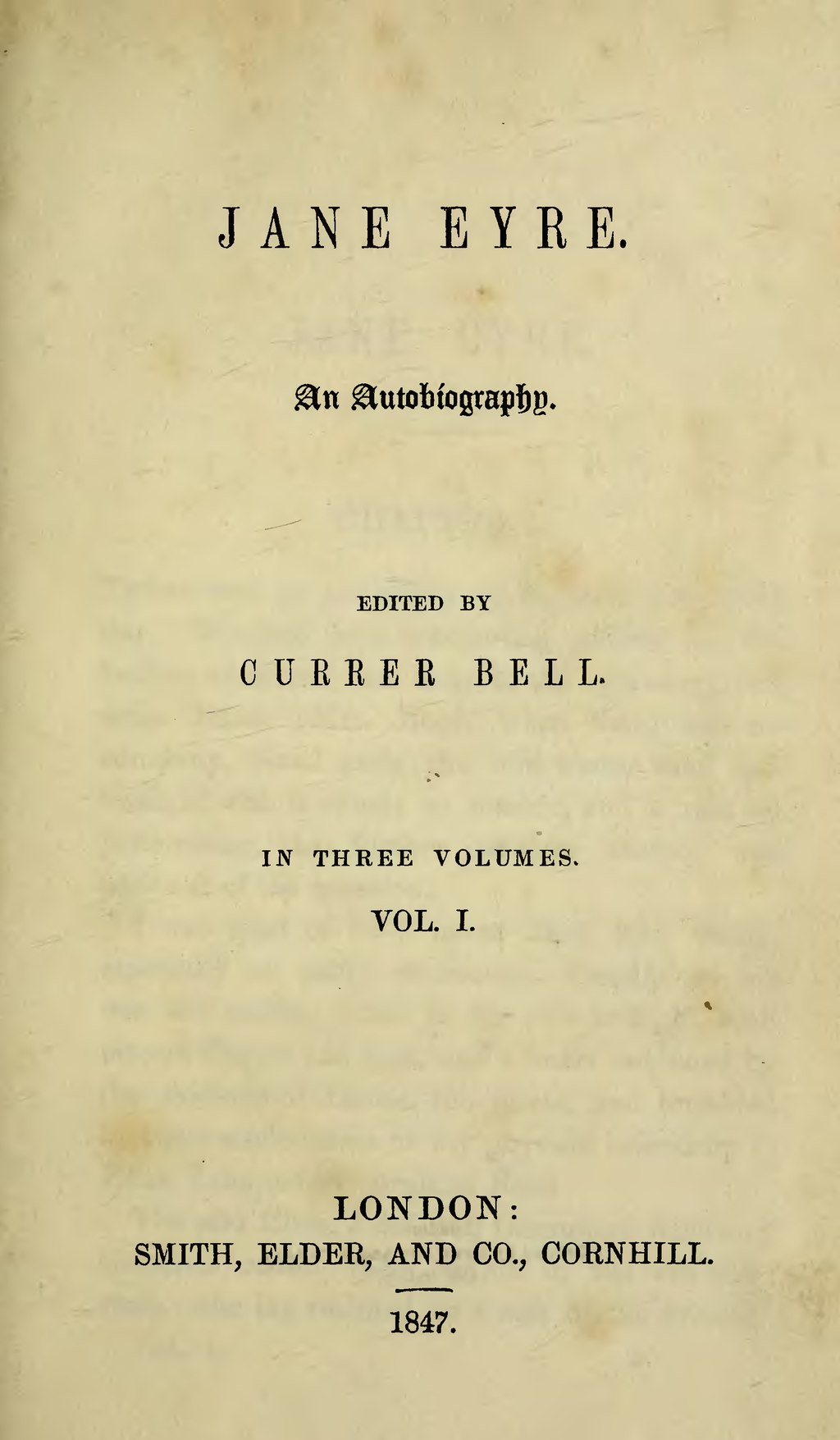
Jane Eyre
At thirty-one, under the male pen name Currer Bell, Charlotte published Jane Eyre, to great acclaim. The man who sent into the world this story of a woman with neither money nor protectors holding fast to a love of equals was George Smith, the young head of the publishing house of Smith, Elder & Co. The Brussels experience may have deepened the shadows in her work — but she had transformed the pain of her real life into a story that could stand on its own.
Walking Around the Table
Fame, however, came alongside loss. In the year after publication and the year after that, her brother Branwell, then Emily, then Anne died in succession, leaving Charlotte alone in the parsonage with her ageing father. The sisters had once made it their nightly habit, after their father had gone to bed, to walk around the table in the dining room, talking over the works they were writing. That she kept walking around the table alone, even after her sisters’ deaths, speaks of a core of strength that would not let go of writing, however deep the loneliness.
Days in London
In London in her mid-thirties, she shrank in company — yet in her letters she showed bold candour and a merciless critical eye. Her letters to Ellen record a faint fondness for Smith, though always with a cool reservation: if only there were not the great barriers of age and fortune. There is no evidence that the two were ever romantically involved. Still, in the anecdote that her letter of congratulation on his engagement was extremely short and curt, something shows through that reason alone could not quite settle.
To this woman — who never lost sight of reality even before a glamorous publisher — an unexpected proposal would soon arrive. Not from a gentleman of society, but from someone almost too close at hand, a man she had paid no attention to for years.
The Curate’s Proposal

Seven and a Half Years Beside Her
The man was Arthur Bell Nicholls, the curate who served under her father. He had lived in the same village for seven and a half years, ever since arriving at Haworth when Charlotte was twenty-nine. At first, though, Charlotte had written of him in her letters as narrow and dull, and she firmly denied the rumours that she might marry the curate. For a woman whose heart had always been moved by talent and passion, a silent, upright curate may have seemed the person furthest removed from love.
Her Father’s Opposition
Then, in the winter of her thirty-sixth year, Nicholls made his unexpected proposal. He declared his feelings trembling all over and white-faced — but her father Patrick flew into a rage, and Charlotte refused the proposal for the time being. Nicholls resigned his post and left Haworth. Yet his sincerity — he broke down during his farewell sermon — moved her heart. After an exchange of letters, she accepted him when he returned in the winter of her thirty-seventh year. By spring, her father had relented. But at the wedding, held at Haworth church in the early summer of her thirty-eighth year, her father did not attend; her old teacher, Margaret Wooler, gave the bride away.
At Haworth Church
The marriage she had once denied turned out to be filled with quiet happiness. In a letter to her old teacher that autumn, she wrote that she had gained a good, kind and affectionate husband, and that her attachment to him grew stronger every day. And in a letter to Ellen that winter, she called her husband her dearest, and confessed her simple happiness: that she felt far fonder of him today than she had six months before. Entrusted with the parsonage household, she ran it ably, and beside her honest husband she savoured a peace that had come to her late.
But the quiet happiness she had finally grasped, after so long a detour, was to end all too soon.
The Spring of 1855

On 31 March 1855, nine months after her wedding, Charlotte Brontë died in the early stages of pregnancy, at the age of thirty-eight. The leading theory holds that she died of hyperemesis gravidarum, severe sickness in pregnancy, though other possibilities, such as typhoid fever, have also been argued; the cause is not settled. Her end — she is said to have cried that God would not separate them, they had been so happy — was a parting far too sudden.
Nicholls remained at the parsonage after her death, serving his father-in-law for nearly six more years, until Patrick’s own death, before returning to Ireland. Even after he remarried, he continued to look after his late wife’s manuscripts and belongings. The long years of the quiet curate tell their own story: the sincerity she had acknowledged in her letters was real.
What Was Charlotte Brontë’s View of Love?
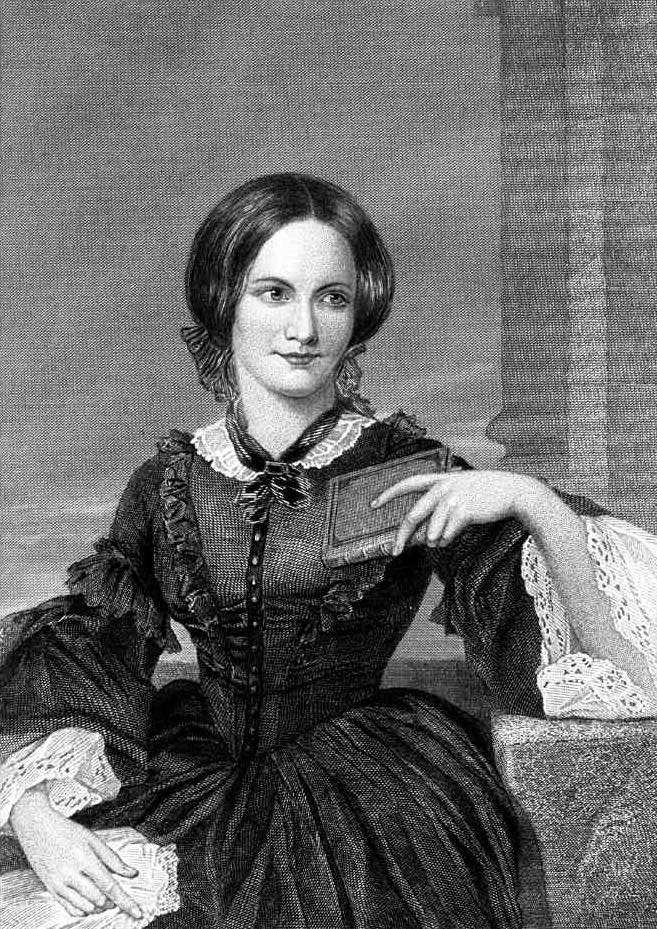
The fierce passion nurtured in imaginary kingdoms became the pride that refused marriage without love, and in time it taught her the bitterness of an unreturned longing. Holding fast to her ideals, yet never giving up her eye for a person’s true worth, her heart passed through loneliness and loss, and what it sought shifted from dramatic romance to quiet trust — until, at last, she chose the peace close at hand.
For her, love seems to have been at once a yearning that scorched her, and an uncompromising dialogue on which she staked her own dignity. However lonely she was, she would not nod to a man her heart could not accept; and once she was drawn to someone, she did not flinch even from being hurt. Holding two opposing temperaments together — an innocent ardour and a cool, clear gaze — what she was truly searching for may have been an honest place where she could remain without shaving away her pride. In the eyes of Charlotte, who crossed awkwardly between the ideal and the real, what landscape did love present, at the very end?
Related Books | Reading Further into Charlotte Brontë
スクロールできます
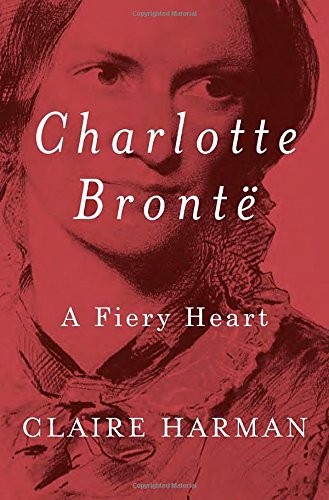
Charlotte Brontë: A Fiery Heart (Claire Harman)
Claire Harman’s acclaimed biography — the Brussels love, the refused proposals, and the curate she finally chose to marry.

The Life of Charlotte Brontë (Elizabeth Gaskell)
Elizabeth Gaskell’s life of her friend, written just after Charlotte’s death from the testimony of those who knew her.

Jane Eyre (Charlotte Brontë)
Her masterpiece: a governess with nothing insists on a love of equals — the novel her own life kept circling.
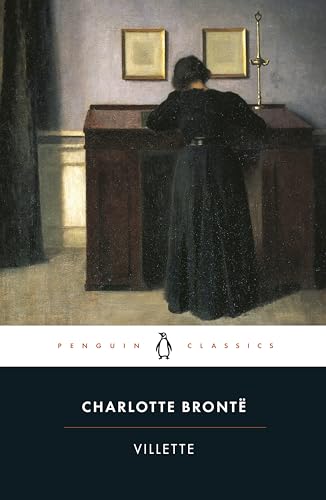
Villette (Charlotte Brontë)
Her final novel, drawn from Brussels: a teacher’s buried, unspoken love for her master, told with clear, unsparing eyes.
[Sources & References]
- Elizabeth Gaskell, The Life of Charlotte Brontë (1857)
- Juliet Barker, The Brontës (1994)
- The Letters of Charlotte Brontë (ed. Margaret Smith)
- The British Library, Brontë materials
- Brontë Parsonage Museum, Haworth

Author
Related Articles
-
 Yukio Mishima | The Novelist Who Published His Conditions for a Wife
-
Victor Hugo and Adèle: The Wife He Never Left, the Mistress He Called “His Widow”
-
Tolstoy and Sophia: A Marriage That Began With a Diary of Sins
-
The Grimm Brothers and the Quiet Loves Behind Their Fairy Tales
-
Osamu Dazai’s Love Life Between Passion and Death
-
Lord Byron’s Scandalous Love Life and His Dangerous Romances
-
Dante’s Lifelong Love for Beatrice, the Muse of The Divine Comedy
-
Hemingway’s Four Marriages and the Women Behind His Novels


More love stories
-
The Virgin Queen Elizabeth I and the Men She Could Not Marry
-
Mozart’s Love for Constanze and the Music It Inspired
-
Picasso and the Women Who Fueled His Art
-
Hemingway’s Four Marriages and the Women Behind His Novels
-
Einstein’s Love Life: The Genius Who Called It “Our Work”
-
Van Gogh’s Love Life and His Unfulfilled Longing for Marriage
New post
-
Charlotte Brontë | The Novelist Who Dreamed of Fierce Love and Chose a Quiet One
-
Yukio Mishima | The Novelist Who Published His Conditions for a Wife
-
Victor Hugo and Adèle: The Wife He Never Left, the Mistress He Called “His Widow”
-
Tolstoy and Sophia: A Marriage That Began With a Diary of Sins
-
Van Gogh’s Love Life and His Unfulfilled Longing for Marriage
-
The Grimm Brothers and the Quiet Loves Behind Their Fairy Tales